Dog moulting: everything you need to know about this natural phenomenon
CONTENT :
- At what age does a dog start moulting?
- How long does a dog moult for?
- How can you tell if an animal is moulting?
- What factors can cause continuous, abundant moulting?
- How do you wash and brush your dog properly during moulting?
All dogs, whatever their breed or lifestyle, go through moulting periods. Often impressive for their owners, this natural phenomenon is about renewing their coat. Although it’s essential, moulting can raise questions, such as: is it normal for my pet to lose clumps of hair? Are there ways of reducing the daily inconvenience? Here Francodex takes a look at the moulting process, how it varies from breed to breed and the best practices to adopt when caring for your pet during this phase.
What is moulting?
Operating alongside regular maintenance of your dog’s coat, moulting is nature’s way of renewing it. Under the influence of photoperiod (length of daylight) and climate, dogs get rid of dead hair to make way for a new coat that’s more suited to the season.
This process makes them feel more comfortable, as a thick coat protects them from the cold (undercoat), while a light coat helps thermoregulation in the warmer months.
The moult consists of 4 phases:
- an anagen phase, when the right hair for the season grows;
- a transitional cartagen phase, with slower hair growth which eventually stops;
- a telogen phase, during which dead hair falls out naturally, often visible as surface clumps;
- exogenous phase of shedding.
Moulting also supports the skin, as the regular renewal of hair helps to maintain healthy skin by eliminating damaged or overly dry hair.
Moulting is not a disease, as long as shedding does not become excessive or is accompanied by symptoms (patches, itching, bare patches) that require veterinary examination.
🐾 Getting rid of clumps of hair: during moulting, dead hair quickly accumulates in a dog’s surroundings. To stop it spreading, vacuum textiles and surfaces regularly using a machine with a motorised brush. Use an adhesive roller for clothes and a rubber broom for floors. Also remember to brush your dog outside or on an easy-to-clean surface! Nature tip! You can leave the collected hair in the garden, as some birds use it to build their nests, particularly in spring.
At what age does a dog start moulting?
A dog’s first moult generally occurs between 4 and 6 months of age, when the puppy coat is gradually replaced by adult fur.
This change can take place over several weeks and can be accompanied by a “transitional” appearance:
- coarser hair;
- sparse areas;
- irregular coat.
This puppy moult is completely normal, but its intensity varies from breed to breed.
Long-haired or double-coated dogs (such as Australian Shepherds, Huskies, Akitas, etc.) may moult more than short-haired breeds. The timing of this first moult can also depend on the time of year when the puppy was born.
Even before this first moult, introduce your pet to grooming and brushing. This ritual will not only help maintain its coat, but also strengthen the relationship of trust between you.
When do dogs moult?
Most dogs moult twice a year, in direct response to changes in light and temperature:
- in spring, a dog loses its dense winter undercoat to make way for a lighter coat that helps regulate heat during the warmer months;
- in autumn, the opposite occurs. The summer coat is shed and replaced by thicker, more protective fur.
However, this seasonal pattern is less marked in dogs that solely live indoors.
Exposure to almost constant artificial light and a stable temperature throughout the year disrupts the natural hormonal variations linked to the photoperiod. As a result, moulting can become more diffuse, or even continuous, with shedding throughout the year.
Some dogs, particularly those from northern or mountain regions, maintain a well-defined moulting cycle despite living indoors. It depends both on the breed, the metabolism, and individual genetics.
How long does a dog moult for?
The length of the moult varies according to breed, coat type and living conditions. On average, a seasonal moult lasts between 3 and 6 weeks, but in some double-coated breeds, such as Samoyeds and collies, it can last up to 2 months.
It should be noted that spring moulting is generally longer and more marked, as it involves the complete elimination of the winter undercoat. On the other hand, the autumn moult, although less noticeable, can also generate large volumes of dead hair.
As we have seen, in dogs living indoors, moulting can become almost permanent, but it is still marked by periods of more intense shedding in addition to the continuous shedding.
So don’t compare your pet to others. Some dogs moult abundantly, but only occasionally, while others moult diffusely throughout the year. Only a sudden or abnormal change in the appearance of your pet’s coat should alert you to a possible problem.
Moulting according to breed: most dogs moult, but the intensity of the phenomenon depends greatly on the breed. Double-coated dogs (Huskies, Malamutes, German Shepherds, etc.) generally shed a lot of hair each season. On the other hand, breeds with curly hair or continuous growth (Poodles, Bichons, Yorkies) experience little or no moulting, because they naturally shed very little hair. Short-haired dogs can also moult profusely, although it is less obvious. Adapt your grooming routine to your pet’s coat type.
How can you tell if an animal is moulting?
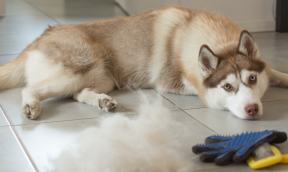
When a dog is moulting there is visible hair loss, which is even more obvious during brushing or on surfaces where it likes to lie.
The coat may appear duller or more irregular. In some areas hair appears sparse, but the skin is not left bare. Tufts of dead hair may also come off easily, especially on its neck, flanks and hindquarters.
If the skin remains healthy and there is no itching, this is a normal moult. In the event of redness, scabs or excessive licking, it’s important to see a vet.
What factors can cause continuous, abundant moulting?
Excessive or persistent shedding can be linked to a number of factors.
In indoor dogs, artificial lighting and heating disrupt the natural hair growth cycle, leading to almost constant moulting.
However, various factors can increase shedding and even cause abnormal moulting:
- stress;
- an unbalanced diet;
- hormonal disorders (hypothyroidism, gestation);
- parasites (fleas, mites);
- certain skin diseases and allergies.
If shedding is accompanied by dandruff, itching or bald patches, it is advisable to consult a vet to identify the cause.
How do you wash and brush your dog properly during moulting?
During moulting, regular grooming helps your dog get rid of dead hair, and avoids tangles and any build-up of hair and sebum on the skin.
Minimum brushing frequency is as follows:
- daily for dogs with long or thick hair;
- every two or three days for the others.
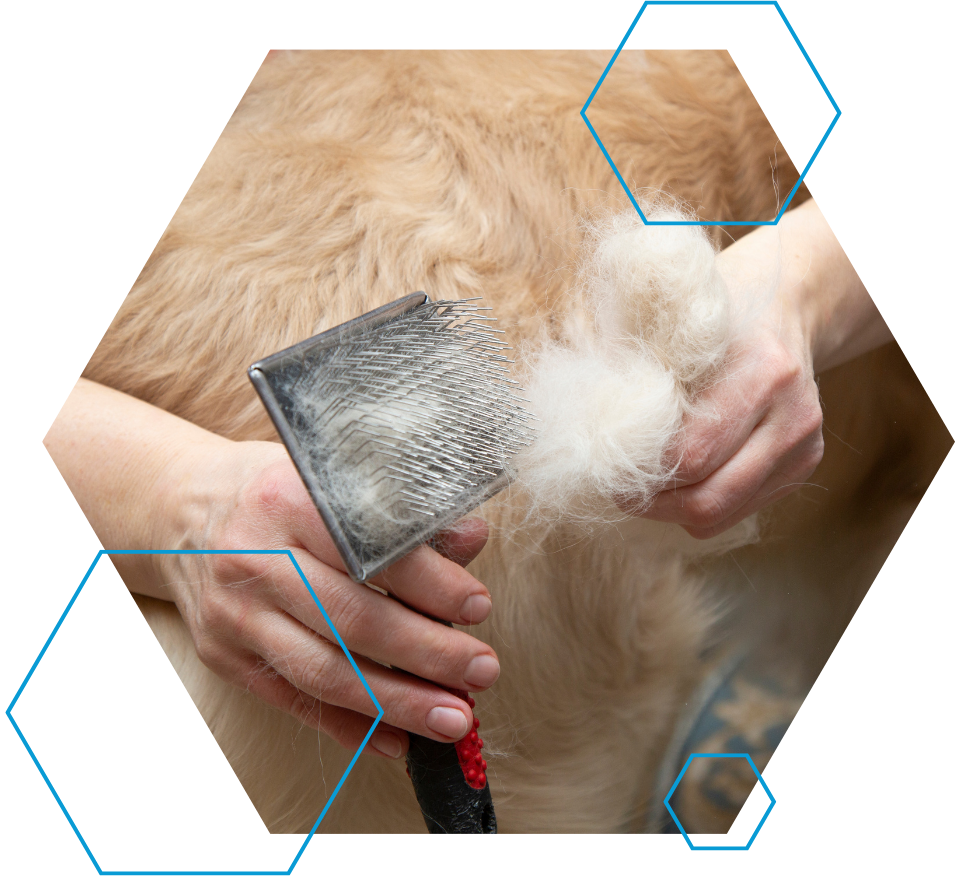
Use suitable tools such as a detangling comb, a two row dematting comb or a double-sided brush, depending on your pet’s type of coat.
A bath every 4 to 6 weeks can be beneficial during moulting. Opt for an anti-shedding shampoo, enriched with ceramides and vitamins.
After the bath, brushing the coat when dry will remove more dead hairs. It’s also a relaxing time to share with your dog, especially if you use a 2-in-1 relaxing grooming brush.
Finding the right brush or comb for a moulting dog
Do dogs sometimes find moulting burdensome?
Although it’s a natural process, moulting can be uncomfortable for some dogs. Excessive accumulation of dead hair can lead to:
- itching;
- irritated skin;
- the formation of painful knots, particularly in breeds with long or thick hair.
If brushing is irregular or insufficient, your dog may lick, scratch or become more agitated.
From a behavioural point of view, some animals become more sensitive to the touch or avoid grooming altogether if it is no longer a pleasant experience. Always use the right equipment (brush, comb and shampoo) to turn grooming into a positive experience.
Even if your sofa is still covered in hair, you now know that moulting is a sign that your pet is in good health and you’ve also learnt some tips on how to make it more comfortable.