My cat washes much more than usual: understanding and stopping this behaviour
CONTENT :
- Is it normal for a cat to wash all the time?
- How can you recognise compulsive licking in felines?
- Why has my cat been licking itself a lot recently?
- What are the consequences of untreated compulsive licking?
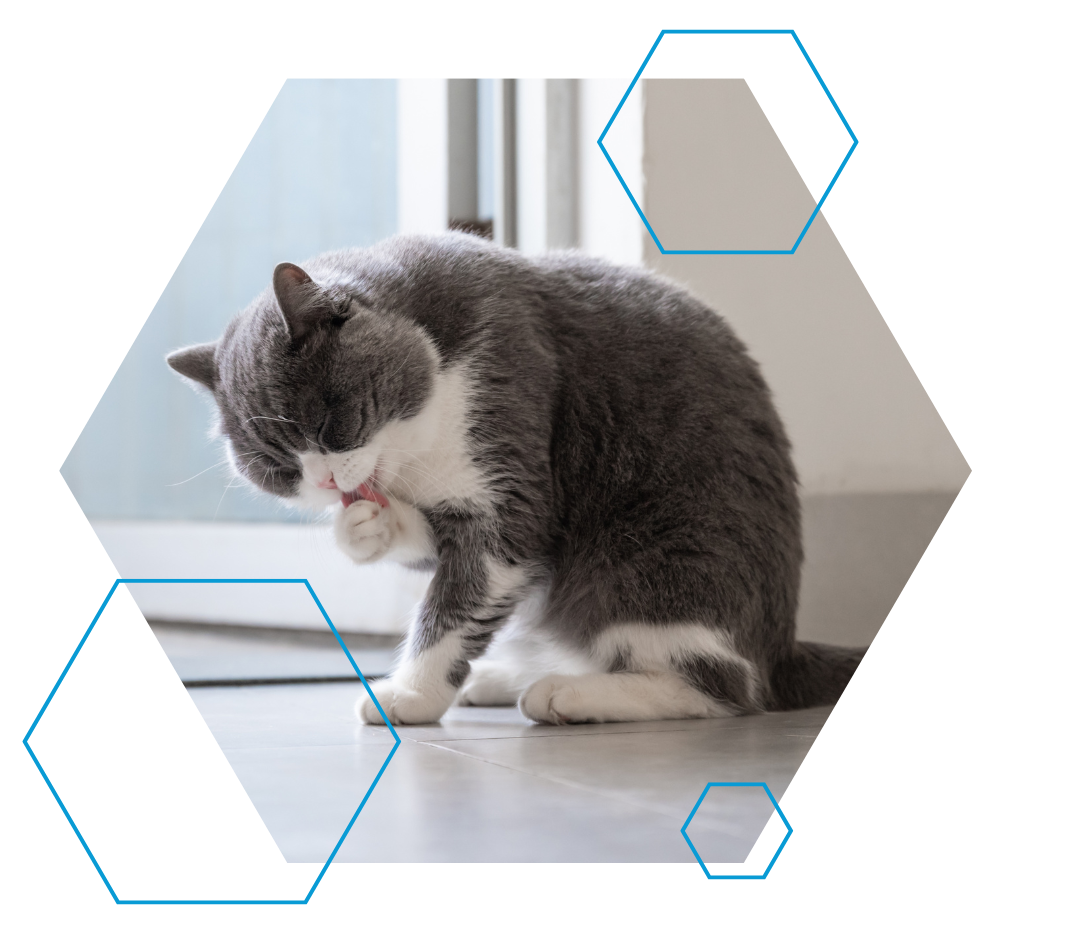
Does your cat spend hours licking itself? Although seemingly harmless, this behaviour may reveal an underlying physical or emotional problem. When grooming becomes excessive, it's no longer a hygiene routine, but a warning signal. How can you recognise compulsive licking? Why does my cat wash a lot more than before? How can you help them return to normal hygiene? Francodex helps you look after your feline every day.
Is it normal for a cat to wash all the time?
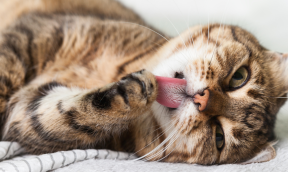
Cat grooming is much more than a simple act of hygiene for your pet. It's an instinctive behaviour, essential to its physical and emotional well-being.
By licking itself, the cat:
- cleans its coat;
- eliminates parasites;
- regulates body temperature;
- stimulates blood circulation;
- relieves stress.
Under normal circumstances, this carefully choreographed ritual can account for up to 30-50% of your cat's waking time.
But when this grooming becomes almost obsessive, i.e. repetitive, prolonged and always targeting the same areas, it’s called excessive licking.
Sometimes this type of licking can even interrupt a cat's other favourite activities, such as playing, hiding, asking for a cuddle or eating.
In this case, the behaviour may reflect an imbalance that is damaging the animal's health. You need to recognise the fine line between routine and excess so that you can take action as soon as possible.
How can you recognise compulsive licking in felines?
A cat that licks itself a lot is not always suffering from a compulsive disorder, but certain signs should alert you. As well as being characterised by abnormal frequency and intensity, compulsive licking can lead to physical damage.
Here are the most revealing symptoms:
- hairless, often symmetrical areas (flanks, belly, legs);
- redness, scabs or sores caused by aggressive licking;
- loss of interest in playing, cuddling or eating;
- licking that disrupts sleep or intensifies at night;
- associated nervousness, even frequent meowing.
This behaviour becomes pathological when it no longer responds to a real need, such as cleanliness or untangling hair, but to a form of malaise.
Compulsive grooming is a disorder that should not be ignored or punished, but rather understood so that it can be better treated.
Why has my cat been licking itself a lot recently?
Understanding the cause of excessive licking is the first step in helping your pet. The causes may be physical or behavioural, or sometimes both.
Physical causes of compulsive licking
Many physical factors can cause unusual licking. The most common are:
- Parasites, fleas, mites, etc. Even if there are no visible parasites, a simple bite can trigger an allergic reaction and intensive licking;
- Allergies, whether to food or the environment (pollen, dust, household products), cause itching and discomfort in cats, who can then wash more often;
- Internal pain, such as a urinary tract infection, can cause a cat to lick its lower abdomen. In addition, osteoarthritis, digestive or neurological pain can also induce this behaviour in certain specific areas;
- Dermatological disorders, such as eczema, atopic dermatitis, ringworm, or even a chemical burn or skin irritation, are all plausible explanations for a cat that licks itself more than usual.
Note that some of these factors can only be seen by veterinary examination. A cat may appear "clean" on the surface, while suffering in silence.
Behavioural causes of frequent grooming
Compulsive licking can also be a sign of chronic stress or an emotional disorder. Grooming is then used as a self-soothing mechanism.
Here are the situations that can cause your cat to become stressed and lick excessively:
- changes in the environment, such as a move, the arrival of a new pet or baby, or a change in territory;
- separation anxiety, especially in cats that are very close-knit or left alone for long periods;
- boredom, because a cat with little stimulation, left with no opportunity to play or explore, compensates by repetitive activity;
- Feline hyperaesthesia is a rare syndrome characterised by nervous hypersensitivity, with attacks of intense licking, spasms and agitation.
These disorders are sometimes mistaken for simple manias, as the cat's behaviour is subtle. However, their impact on your pet's quality of life is real and deserves your full attention.
What are the consequences of untreated compulsive licking?
Allowing excessive licking behaviour to become established over time can cause real physical and emotional suffering in cats.
The most frequent consequences include:
- chronic skin lesions, because repeated licking weakens the skin barrier, causing redness, sores and then bacterial or fungal superinfections;
- psychogenic alopecia. This term refers to hair loss caused by compulsive behaviour, in the absence of a proven medical cause. It mainly affects anxious or hypersensitive cats. Affected areas are often symmetrical and the hair takes a long time to grow back;
- a vicious circle of behaviour. The more the cat licks itself, the more it reinforces this reflex. This mechanism can anchor a behavioural disorder for a long time, even if the initial cause disappears;
- digestive problems, as swallowing too many hairs increases the risk of hairballs in the digestive system, leading to vomiting or constipation;
- an overall drop in quality of life, with pain, discomfort, social isolation, sleep problems, etc. Your cat is no longer relaxed in everyday life.
Intervening at an early stage prevents this behaviour from crystallising into a long-term pathology that is very difficult to correct.
What can I do to get my cat back to normal hygiene?
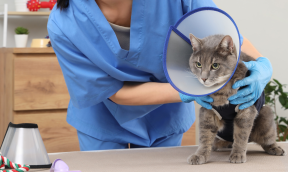
Alleviating a cat that licks itself excessively starts with an essential step: a visit to the vet. This is what enables us to identify the real cause of the behaviour and propose lasting solutions.
If the cause is physical: take action on the skin and discomfort
When licking is linked to an allergy, skin irritation or parasitic infestation, the basic treatment will be prescribed by the vet.
However, you can give your companion localised relief. In this context, certain gentle hygiene treatments can greatly improve comfort.
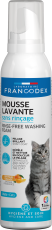
For example, Francodex no-rinse cleansing foam cleans and soothes the skin without having to wet the cat completely, which is ideal for lesions or stress.
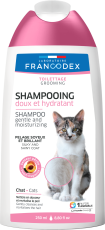
The Francodex gentle moisturising shampoo helps to moisturise the epidermis and repair the skin's protective film, while respecting the cat's natural pH.
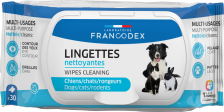
In addition, the multi-purpose cleaning wipes are practical for regular care of areas prone to licking, especially if you need to avoid washing your pet too often. Talk to your vet!
-
Rinse-Free Cleansing Foam
Product info
Rinse-Free Cleansing Foam
Discover the product sheet " Rinse-Free Cleansing Foam ".
-
Gentle and Moisturizing Shampoo 250ml
Product info
Gentle and Moisturizing Shampoo 250ml
Discover the product sheet " Gentle and Moisturizing Shampoo 250ml ".
-
Cleansing Wipes
Product info
Cleansing Wipes
Discover the product sheet " Cleansing Wipes ".
If the cause is behavioural: secure the emotional environment
In cases where licking is the result of chronic stress or a behavioural disorder, more comprehensive support is required.
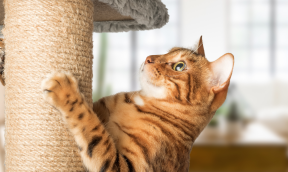
Cats need a stable, predictable and reassuring environment in which they can exercise their instincts without frustration: exploration, play, observation, resting on high ground.
The presence of hiding places, quiet areas and stimulating activities helps to reduce anxiety and distract the cat from repetitive behaviour.
You can also soothe your pet with synthetic pheromones or complementary natural foods prescribed by your vet for their stress-regulating effects.
As part of this comforting approach, certain gentle hygiene routines also contribute to the cat's emotional well-being.
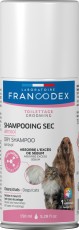
Sometimes, elderly or sick cats lick themselves more than usual, because they find it hard to get their coat as clean as they would like. Opting for a dry shampoo aerosol means you can wash your cat without using water. The cleaner your pet is, the better it will feel.
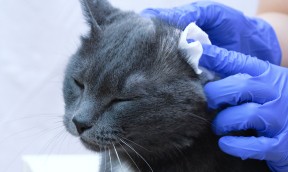
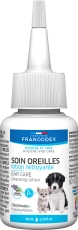
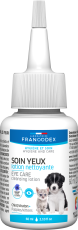
The importance of overall hygiene: don't forget that your cat needs you for certain care, such as effective tooth brushing. You can also supplement this grooming time by cleaning its eyes with an eye cleansing lotion and cleaning its ears from time to time with an ear cleansing lotion. Your feline will feel pampered and soothed.
By combining these actions with appropriate medical care, your pet's behaviour should gradually return to normal.
-
Dry shampoo aerosol
Product info
Dry shampoo aerosol
Discover the product sheet " Dry shampoo aerosol ".
-
Ear Care Cleansing Lotion
Product info
Ear Care Cleansing Lotion
Discover the product sheet " Ear Care Cleansing Lotion ".
-
Eye Care Cleansing Lotion
Product info
Eye Care Cleansing Lotion
Discover the product sheet " Eye Care Cleansing Lotion ".
How can you prevent your cat from starting to wash a lot?
It's not enough to relieve a cat that licks compulsively; you have to prevent relapses.
This is where prophylaxis comes in, in other words all the preventive measures to be adopted to avoid a return to compulsive licking.
By combining veterinary expertise, appropriate skin care, a soothing environment and emotional support, you can act on both the causes and consequences of excessive licking in cats.
Once these good habits have been established, make sure your pet's environment remains stable to ensure its long-term well-being.
Article written with the assistance of
Dr Marie Marossero, veterinary surgeon