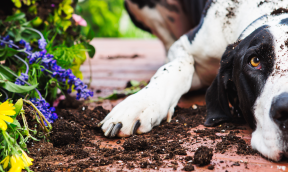
My dog destroys everything outside: what can I do to stop them?
CONTENTS :
- Why does a dog destroy everything outside?
- What can your pet attack outdoors?
- What risks does a destructive animal run?
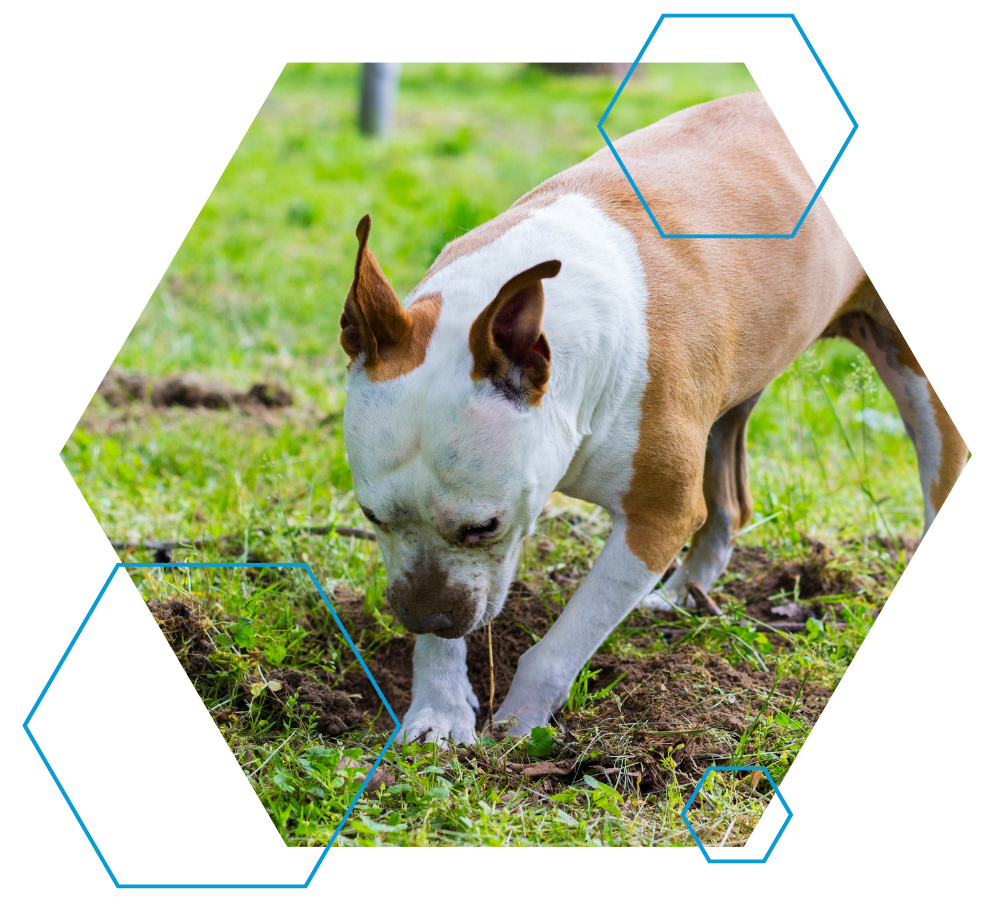
You come home from work to find your garden in tatters: flower pots knocked over, holes in the lawn, patio cushions ripped open, and so on. And in the midst of all the chaos, your pet, who seems very happy to see you again. Wondering why your dog is destroying everything outdoors? How can you get them to stop these unwanted behaviours? But you’re also thinking about the risks to your pet when it destroys materials and objects that are far from being toys.
Soothing your dog for a more peaceful life
Why does a dog destroy everything outside?
Destructive outdoor behaviour is frequently observed in dogs, especially when they spend a lot of time alone in the garden. Contrary to popular belief, this is not revenge behaviour. Dogs act according to their natural needs, their emotions and their environment. So why is yours destroying your garden?
Boredom and lack of stimulation
The garden is often wrongly perceived as being enough for a dog to play in.
But with no interaction, novelty or goal, dogs quickly get bored, and try to find things to do.
Digging, chewing and chasing leaves are all behaviours that dogs use to channel their energy and curiosity, but they often result in destruction.
Instincts and natural behaviours
For centuries, some breeds have been selected specifically to:
- dig (terriers);
- hunt (Labradors);
- herd (shepherds);
- guard a territory.
Always present, these instincts come to the fore naturally in a garden left at the dog’s disposal.
Stress or anxiety
A dog left alone for too long or in an unsettling environment may develop compensatory behaviours.
Destroying things becomes a way of releasing emotional tension. This stress can be linked to:
- separation anxiety;
- unusual noises;
- a change of routine;
- the absence of familiar landmarks.
Too much energy
A young or very active dog needs to exercise intensely.
If they are not taken for walks enough or given enough mental stimulation, they’ll try to release this energy in other ways.
So a patio cushion, a branch or a planter can become a prime target!
Lack of a clear educational framework
A dog that has never learnt boundaries or is regularly left unsupervised does not have the necessary cues to distinguish between what is and isn’t allowed.
They act out of opportunism or habit, not with malicious intent.
What can your pet attack outdoors?
When a dog is left alone in a garden or outdoor space, it can turn that environment into a playground for exploration and demolition.
Destruction takes many different forms, often linked to natural curiosity, the need to chew or simply the desire to play.
Here is a list of items frequently targeted by destructive dogs outdoors:
- plants they’ll dig up, because they love the smell of fresh soil and organic fertiliser;
- leaves and stems, which they chew for taste or out of boredom;
- grass, which they can dig up to hide objects or sniff out new smells;
- garden furniture, because dogs love wood and resin, which quickly break up under their teeth, and because they hope to find leftovers from aperitifs or barbecues;
- anything that might be lying around in a garden and could be used as a toy or something to chew: decorative cushions, irrigation cables, flower pots, garden tools, forgotten children’s toys, etc.
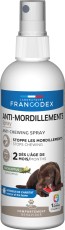
To limit outdoor damage caused by chewing, use a anti-chew spray to spray on forbidden surfaces.
💖 Dogs’ favourite areas outdoors:
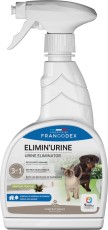
Dogs are particularly fond of fences, so they can sniff out other dogs and scents that they are unable to access. They also enjoy the scents, fertilisers and little animals around vegetable gardens. Lastly, flowerbeds and trees are perfect for digging and nibbling at greenery. Use a urine stain remover to prevent your pet from soiling these areas, as they are often marking zones.
What risks does a destructive animal run?
A dog that destroys everything outdoors not only puts your garden at risk, it also puts itself in danger of various kinds:
- swallowing dangerous materials, such as pieces of plastic, wood, earth, stones, etc., which can cause intestinal obstruction or mouth lesions;
- contact with plants that are toxic to dogs (oleander, lily of the valley, cycads, etc.), and can cause digestive, neurological or cardiac problems;
- injuries, as your dog may bump or cut itself, or get stuck by knocking over a pot or frantically tearing at an object.
What’s more, repeated outdoor destructive behaviour helps to reinforce this bad habit. Your dog may also become territorial and take over certain areas of the garden.
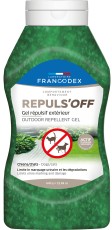
To protect both your pet and your property, use a natural outdoor repellent gel that will remain active for several weeks, keeping your pet away from areas that you want to protect or that are dangerous for it.
-
Anti-Chewing
Product info
Anti-Chewing
Discover the product sheet " Anti-Chewing ".
-
Urine Eliminator
Product info
Urine Eliminator
Discover the product sheet " Urine Eliminator ".
-
RepulsOff Outdoor Gel Repellent
Product info
RepulsOff Outdoor Gel Repellent
Discover the product sheet " RepulsOff Outdoor Gel Repellent ".
How can I stop my dog’s destructive behaviour outdoors?
To stop your dog destroying your garden, adopt a consistent, comprehensive, caring approach. Punishment doesn’t solve anything: it’s better to prevent, channel and educate.
Meet your dog’s needs
A dog that destroys things outdoors is often lacking in physical or mental stimulation:
- daily walks outside the garden to explore new environments;
- active play sessions: ball throwing, running, hide-and-seek, canicross, etc., adapted to suit your dog’s breed, age and needs;
- cognitive exercises: learning tricks, sniffing games, finding objects.
Keep the dog busy in a more appropriate way
Boredom is a destructive dog’s number one enemy. Provide them with:
- sturdy chew toys to channel their need to chew;
- toys that dispense sweets or snuffle mats;
- an area where they are allowed to dig, such as a sandpit or specific marked out area in the garden.
Create a secure environment
To deter your dog from destroying your garden, the best thing to do is to make sure they have no opportunity to do so:
- surround flowerbeds or vegetable gardens with borders or netting, as physical protection is always the most effective;
- put away the most tempting objects (tools, shoes, cushions);
- use a natural indoor/outdoor repellent on areas to be protected.
In addition to these measures, spend more time with your pet in the garden so that it associates this place with enjoying its master’s company. What’s more, you’ll find it easier to stop them destroying your garden if you’re there beside them.
Education remains key to avoiding inappropriate behaviour. A dog doesn’t understand what it is supposed to do, it learns it all from you. So be consistent and constant: what is forbidden one day must remain so the next.
💖 Positive reinforcement (petting and treats) is always more effective than punishment, which generates fear and confusion.
-
Indoor and Outdoor Repellent Dog 750ml
Product info
Indoor and Outdoor Repellent Dog 750ml
Discover the product sheet " Indoor and Outdoor Repellent Dog 750ml ".
-
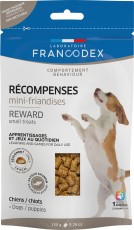
Reward Small Treats
Product info
Reward Small Treats
Discover the product sheet " Reward Small Treats ".

Consider calling in a dog behaviour professional
If, despite all your efforts, your dog continues to destroy everything outside, consult a dog behaviourist, who will be able to analyse the situation in detail and suggest personalised solutions.
Your vet can also check that there are no underlying disorders (pain, generalised anxiety, cognitive problems, etc.).
Now you know what to do to stop your dog destroying your garden, it’s time to have some fun together. Why not see if they’d like to play a game of ball in the garden?
Helping your dog to feel calmer
FAQ: My dog destroys everything outside
Can a dog stay outside all the time?
A dog can spend time outdoors, but only a few hours, not all the time.
Even a large garden is no substitute for interaction, walks and social stimulation.
Prolonged isolation can lead to frustration, anxiety and behavioural problems, including destructive behaviour.
How do you stop a dog digging holes in the garden?
To stop a dog digging holes everywhere, give them a place where digging is allowed.
If they’re digging out of boredom, enrich their daily routine with a variety of games. If it’s linked to a hunting instinct, keep an eye out for rodents.
Redirecting your dog regularly and consistently is key to bringing about a lasting change in this undesirable behaviour. What’s more, it stimulates them mentally and tires them physically.
What smells stop dogs from digging?
Certain smells are naturally unpleasant for dogs:
- citrus fruits (lemons, oranges);
- white vinegar;
- pepper;
- specific essential oils (eucalyptus, citronella).
These odours may deter your pet from time to time, but they can never replace education or enriching their surroundings.
⚠️ Take care not to use irritating or toxic products.
Which breeds of dog dig most?
Certain breeds of dog have been selected for their ability to search and track:
- terrier-type breeds, such as Jack Russells, Fox Terriers and Westies;
- breeds with a strong hunting instinct, such as Beagles, Dachshunds and Huskies.
That said, any dog can dig, depending on its temperament, age and general level of activity.
Article written with the assistance of
Dr Marie Marossero, veterinary surgeon