Guinea pigs (cavies): everything you need to know about these small mammals
CONTENT :
- What do guinea pigs/cavies eat?
- Where do guinea pigs (cavies) live?
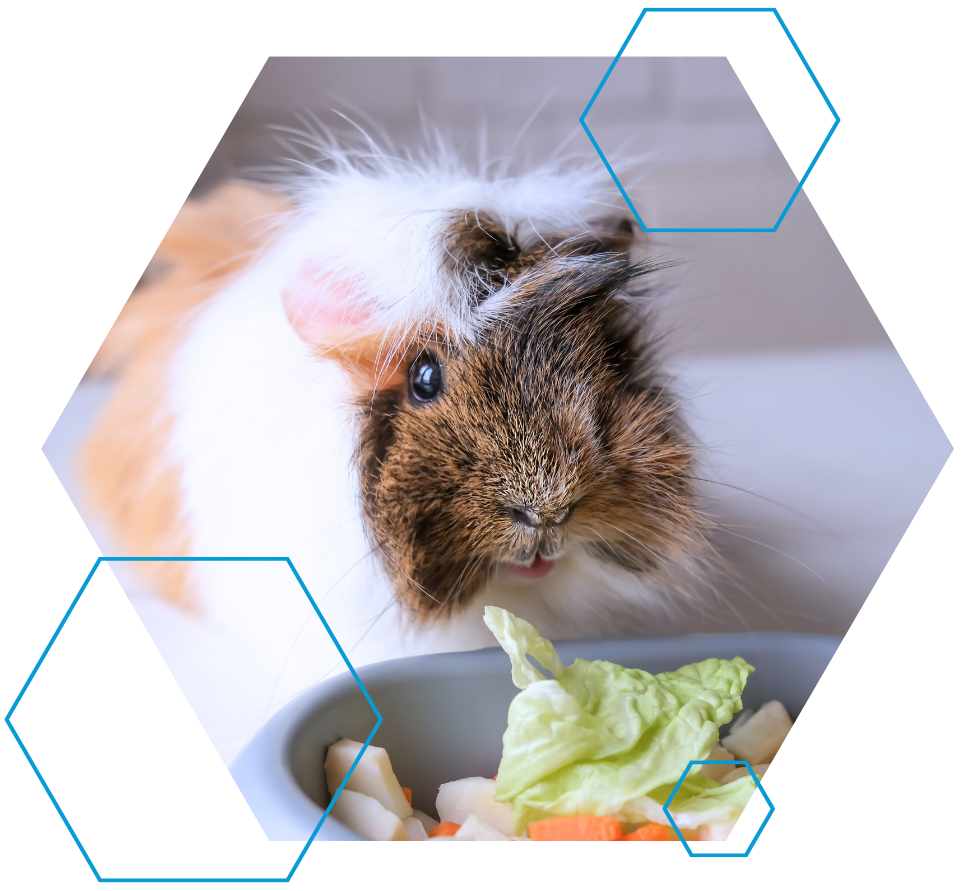
Affectionate, calm and easy to tame, guinea pigs, also known as cavies, make perfect pets - as long as you know what they need! Native to South America, this small rodent has precise requirements in terms of diet, habitat and care. If misunderstood, they can quickly develop digestive, dental or behavioural problems. Francodex helps you give your exotic pet a happy, healthy life.
Guinea pig/cavy fact sheet
Let’s start with a summary of the main physical, morphological, biological and behavioural characteristics of the guinea pig or cavy.
|
Common name |
Guinea pig |
|
Other names |
Cavy |
|
Scientific name |
Cavia porcellus |
|
Classification |
Mammal |
|
Family |
Caviidae |
|
Origin |
Domesticated in the Andes, from the wild Andean species Cavia tschudii. |
|
Diet |
Strictly herbivorous rodent |
|
Adult weight and height |
Between 800 and 1200 g (male Giant Guinea Pig or Cuy upto 2 kg) |
|
Sexual maturity |
2 months for females 3 months for males |
|
Gestation period |
65 to 68 days with an average of 3 young (between 1 and 5) |
|
Duration of weaning |
Between 4 and 6 weeks |
|
Longevity |
Between 5 and 6 years on average |
|
Period of activity |
Diurnal |
|
Temperature/heart |
Temperature: 37- 39°C Heart rate: +/-250bpm Breathing about 100/min |
|
Behaviour |
Social, gregarious and neophobic |
|
Dominant senses |
Excellent sense of smell (vomeronasal organ) |
|
Dental particularities |
Continuously growing incisors |
Guinea pigs are nesting animals, and their babies are miniature adults born with fur and open eyes. They quickly become very resourceful.
There are different varieties of guinea pig:
- smooth-haired guinea pigs
- English guinea pigs (crested)
- rosette/Abyssinian guinea pigs
- Rex guinea pigs
- long-haired guinea pigs (Peruvian, Sheltie/Silkie)
- Texel guinea pigs
- “skinny”/hairless guinea pigs.
Differences between guinea pig, cavy and hamster:
Guinea pig and cavy refer to the same animal, Cavia porcellus. The term “cavy” is more scientific, while “guinea pig” is thought to come from the fact that their squeals sound like those of a pig combined with their having originally been imported from South America by way of either Guinea or Guiana. The hamster, on the other hand, is another species of rodent, smaller, nocturnal and solitary. Their needs are very different.
What do guinea pigs/cavies eat?
To help you feed your guinea pig properly, find out how it eats in the wild.
What guinea pigs eat in the wild
In its native environment, the high grassy plateaux of South America, the guinea pig feeds exclusively on plants. It mainly eats:
- grasses,
- herbaceous plants,
- a few leaves,
- roots and young shoots it finds on the ground.
Its digestive system is perfectly adapted to this high-fibre diet, with specific intestinal flora and teeth that grow continuously.
It is essential that their natural diet guides what they are given to eat in captivity.
The ideal diet for captive guinea pigs
Feeding a domestic guinea pig is based on three components:
- Self-service hay is the primary basis of its diet. Rich in long fibre, it aids digestion and dental wear. Choose really green, dust-free hay, such as Crau hay (grown in France) or Timothy hay.
- Fresh vegetables every day to ensure enough vitamin C and water intake. The most suitable vegetables are red pepper, courgette, fennel, celery, chicory and parsley. Rich in sugar, fruit should be offered sparingly, once or twice a week (e.g. apple or kiwi).
- Complete pellets, in limited quantities, can be used to supplement the diet, particularly during gestation and periods of growth. Choose special guinea pig pellets, without mixtures or cereals, and limit the ration to one tablespoon a day.
Your guinea pig should also always have clean, fresh water available.
The key role of vitamin C in guinea pig nutrition
Guinea pigs do not synthesise vitamin C, which means they are particularly vulnerable to deficiencies. A deficiency can lead to:
- joint pain,
- difficulty moving around, or even paralysis of the hindquarters,
- coat and dental problems,
- weakened immune system,
- loss of appetite.
Even with a balanced diet, supplements are often necessary, especially in winter, when the animal is stressed or when fresh vegetables are in short supply. The recommended daily dose of vitamin C for a guinea pig is 20 mg per kilo.
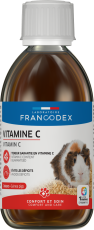
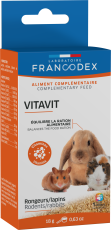
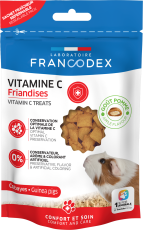
Francodex recommends Vitamin C 250 ml for guinea pigs, either diluted in water or added to food. For more demanding periods (growth, gestation, convalescence), Vitavit is the ideal multivitamin complex. And as a simple everyday pleasure, vitamin C treats for guinea pigs offer an essential supplement.
-
Vitamin C 500ml
Product info
Vitamin C 500ml
Discover the product sheet " Vitamin C 500ml ".
-
Vitamin C Treats 50g
Product info
Vitamin C Treats 50g
Discover the product sheet " Vitamin C Treats 50g ".
🐹 Foods you should never give guinea pigs:
Certain foods are dangerous for guinea pigs. Toxic foods include avocados, onions, garlic, rhubarb and raw potatoes. Other foods are bad for a guinea pig’s digestion, including bread, dairy products and industrial cereals. Finally, some fruits, such as bananas, grapes, dried fruit and nuts, are too rich .
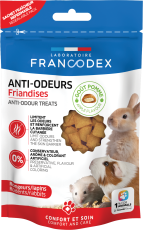
A strict herbivore, your rodent should never eat table scraps, treats other than those intended for guinea pigs, or fatty foods. To please your little pet and make it more comfortable, give it:
-
Odour Care Treats
Product info
Odour Care Treats
Discover the product sheet " Odour Care Treats ".
-
Hairball Remedy Treats
Product info
Hairball Remedy Treats
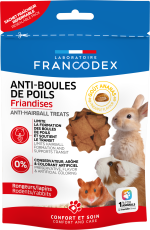
Discover the product sheet " Hairball Remedy Treats ".
-
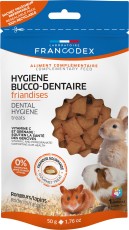
Dental treats
Product info
Dental treats
Discover the product sheet " Dental treats ".
Where do guinea pigs (cavies) live?
In the wild, the guinea pig’s ancestors evolved in the grassy areas of the Andes, often in small groups. They dig galleries or move into natural shelters to protect themselves from predators. This lifestyle involves constant activity, exploration and social interaction.
In captivity, you need to recreate an environment that respects these basic needs as far as possible:
- safety
- space
- stimulation
- comfort.
Quiet and sheltered from draughts, your guinea pig’s cage should be at least 0.5 m² for one individual. The floor should be covered with absorbent natural bedding, such as hemp or flax.
A guinea pig needs:
- hiding places (houses, tunnels, bridges)
- a separate place to eat with food bowl and water bottle
- a quiet rest area
- food and objects to gnaw on.
It likes its routine, natural light without direct exposure and a stable temperature of around 20°C. Its cage should be cleaned 2 or 3 times a week.
Daily outings in a secure enclosure are highly recommended, to stimulate its natural exploratory behaviour.
What’s more, your guinea pig is very sociable and loves your company, and its well-being depends on being able to live with other guinea pigs. However, avoid putting two males together, unless they are neutered. To avoid unwanted reproduction, remember to only bring sterilised males and females into contact with each other.
A 5-in-1 disinfectant spray is ideal for effectively cleaning their home without irritating their sensitive airways, as it cleans, disinfects and neutralises odours.
How do you welcome a guinea pig into your home?
For a guinea pig, being moved to a new environment is a major source of stress. To help them adapt, prepare their living space before they arrive.
Let your new companion settle in at its own pace, in a calm environment, and avoid handling it for the first few hours. Speak to it softly, approaching with no sudden movements.
Secondly, offer treats by hand to build trust. Similarly, feeding should be introduced gently.
Offer familiar vegetables (if it was already eating them) and free access to quality hay. Pellets can be added to supplement the nutritional intake in the days that follow.
⚠️ To limit stress, you can spray an anti-stress spray, formulated with extracts of valerian, passionflower and hawthorn, around its cage.
If you have other guinea pigs, introduce them gradually, after a few days’ health quarantine.
How to look after your guinea pig’s health
Find out right now how to groom your guinea pig and trim its claws.
Although guinea pigs are robust animals when properly fed and housed, they are still vulnerable to certain disorders.
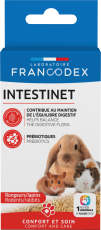
Guinea pigs’ digestive systems are sensitive to sudden changes, badly washed vegetables or a diet low in fibre. During periods of dietary transition or convalescence, a supplement like Intestinet helps to balance a rodent’s digestive flora.
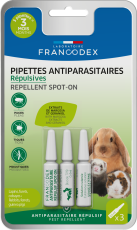
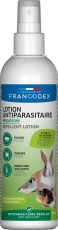
What’s more, external parasites (lice, mites) might infest your guinea pig. For prevention, use insect repellent pipettes (effective for 1 month) or insect repellent lotion to repel pests.
-
Intestinet
Product info
Intestinet
Discover the product sheet " Intestinet ".
-
Repellent Spot-on
Product info
Repellent Spot-on
Discover the product sheet " Repellent Spot-on ".
-
Repellent Lotion
Product info
Repellent Lotion
Discover the product sheet " Repellent Lotion ".
Biocide TP 19: Use biocidal products with care. Always read the label and product information before use.
Guinea pigs are also subject to developing kidney stones (urolithiasis) and can develop kidney failure. It’s important to check that your pet is urinating regularly.
Finally, hairballs can affect the comfort of long-haired guinea pigs, particularly during moulting. Easily administered with a feeding syringe, Francodex hairball paste helps eliminate hairballs naturally.
Article drawn up with the assistance of
Dr Marie MORIN, Veterinary Surgeon